
Make way, SETI (aka the Look for for Extraterrestrial Intelligence). There is a new recreation in city, which may be named SETA (the Look for for Extraterrestrial Artifacts), though it is formally known as the Galileo Challenge.
SETI started in 1960 and has, in the intervening six many years, been virtually solely minimal to the research for radio and laser signals from possible alien civilizations. The Galileo Challenge, which was released this thirty day period with a July 26 press announcement, will alternatively embark on a systematic research of the skies earlier mentioned Earth and outer house for artificial objects of extraterrestrial origin — achievable house probes, active sensors, or very long-defunct “astro-archaeological artifacts.”
Serendipity played a function in the begin of this enterprise, according to Harvard astronomer Avi Loeb, who heads the Galileo Challenge. In early July, Loeb informed Discover, “an administrator in Harvard’s Astronomy Office informed me they’d just acquired $200,000 for my research fund, which another person experienced donated devoid of even telling me.” A day or so later, Loeb was equipped to get hold of the generous particular person (whom he didn’t know beforehand), and immediately after their dialogue he was specified even far more cash. Due to the fact then, other folks have sent cash to assistance this research effort, no strings hooked up. In a pair of weeks, Loeb gathered $1.seventy five million. “They generally informed me: ‘Here is the cash. Do with it whichever you feel is proper,’” he mentioned. “In all my many years in academia, that sort of issue by no means takes place.”
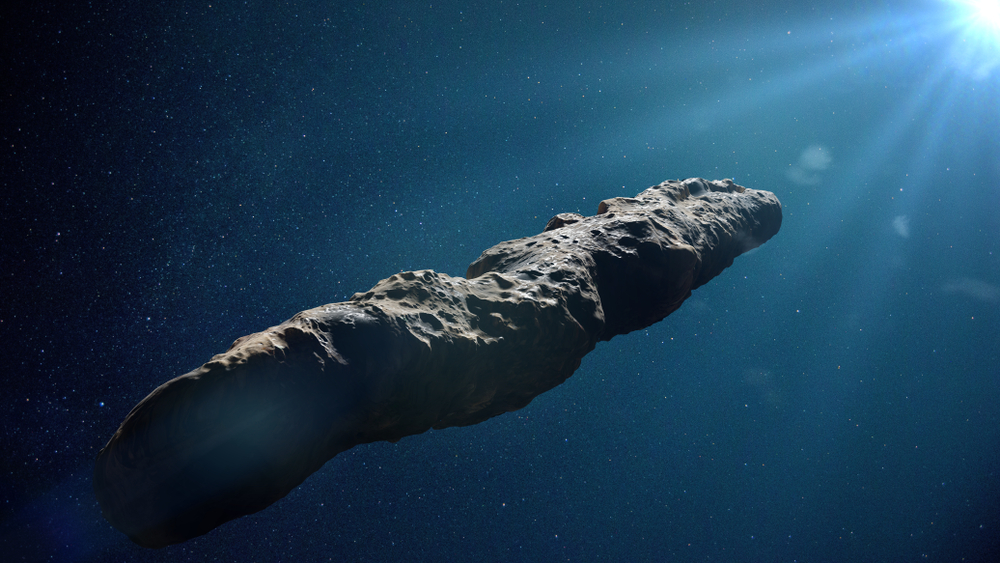
Loeb experienced acquired some notoriety from the January 2021 publication of his e book, Extraterrestrial, which argued that ‘Oumuamua — the initially known object passing by Earth to appear from outside the photo voltaic technique — experienced peculiar functions contrary to those of any asteroid or comet seen before. ‘Oumuamua is now headed towards Neptune on its way out of the photo voltaic technique, and we’ll by no means know accurately in which it came from or what it is built of. Loeb issued a controversial suggestion in his e book, and in a 2018 Astrophysical Journal Letters paper, that ‘Oumuamua could be the products of an alien civilization — a likelihood, he stressed, that should really not be dismissed out of hand. Extraterrestrial is now a bestseller which is been translated into twenty five languages, and Loeb has submitted to far more than 1,000 interviews, averaging six for every day for six months. He has been efficient, as nicely as tireless, in having the word out, and that concept has seemingly resonated with some men and women — which include a couple nicely-heeled donors.
(Credit history: Loeb Picture Assortment)
Devoid of partaking in any fundraising, Loeb has previously secured adequate seed cash to get the Galileo Challenge started, and he’s assembled a research crew that contains scientists (presently working on a voluntary foundation) from Caltech, Cambridge College, Harvard, Princeton, Stockholm College, the College of Tokyo, and other institutions.
Unexplained Phenomena
A person of the Galileo Project’s key focuses will be to glance at UFOs, also named Unidentified Aerial Phenomena (UAP) in a June twenty five, 2021 report by the U.S. Business of the Director of Nationwide Intelligence, which concluded that “a handful of UAP look to demonstrate state-of-the-art technology” and that “limited information leaves most UAP unexplained.”
“That was a novel admission,” Loeb commented, “a federal government report that concluded there are objects in the sky we do not know the nature of. I say, let’s move this discussion to the realm of science so that we can last but not least apparent up the dilemma applying regular research methods.
“You wouldn’t ask a plumber to bake a cake,” he added. “Similarly, men and women in the armed service or in politics are not properly trained as scientists, and should really not be asked to interpret what they see in the sky.” Accordingly, the Galileo crew is previously developing a community of modest, floor-dependent telescopes, around ten inches in diameter, that will be connected to cameras and computer units. “We’ll use these telescopes and course of action the information in the same way astronomers often do,” Loeb explained, “but alternatively of seeking at distant objects, we’ll glance at close by objects, going speedy across the sky.” In just a calendar year, he and his colleague hope to begin accumulating information that will be open to the general public and science local community so that anybody can examine it.
A Harvard formal lately questioned Loeb as to regardless of whether this research falls less than his task description. “I examine and interpret information from telescopes,” he replied. “That’s what astrophysicists do.”
Another Galileo Challenge goal is to develop program and algorithms that can choose out other interstellar objects like ‘Oumuamua from information gathered by the Legacy Survey of Place and Time (LSST) telescope, which is due to start off operations in 2023. If an object is detected early adequate, on its way into the photo voltaic technique, a house mission could be initiated to get shut adequate to the ET visitor to get hold of a significant-resolution photo that would be worth far more than 1000 words and phrases in Loeb’s estimation. And these times, he wouldn’t necessarily have to influence a huge bureaucracy like NASA to back again these types of a mission. “Instead, we may have to influence just Elon Musk or Jeff Bezos.”
Daring to Glimpse
There is a significant stigma linked with UFOs, Loeb pointed out, which will make several scientists feel they’re not worth learning — or even seeking at. He’s not sympathetic to that watch, as it reminds him of the cure Galileo Galilei acquired from philosophers of his period who, in the early 1600s, disputed his discoveries of the moons around Jupiter, or the rings around Saturn, and even refused to glance by Galileo’s telescopes to see for them selves.
The same sort of resistance comes up anytime the likelihood is lifted that some matters we see in the sky could have been built by other intelligent beings. Some skeptics subscribe to the dictum, initially articulated by Carl Sagan, that “extraordinary claims require remarkable evidence,” carrying that tenet a action more by insisting that remarkable evidence is essential before a person should really even start off learning UFOs or consider the prospect that peculiar ‘Oumuamua-like objects may be artificial. Attitudes like that have prompted Loeb to modify Sagan’s statement into a sort of cri de coeur for the Galileo Challenge: “Extraordinary conservatism leads to remarkable ignorance.”
About the Author

