
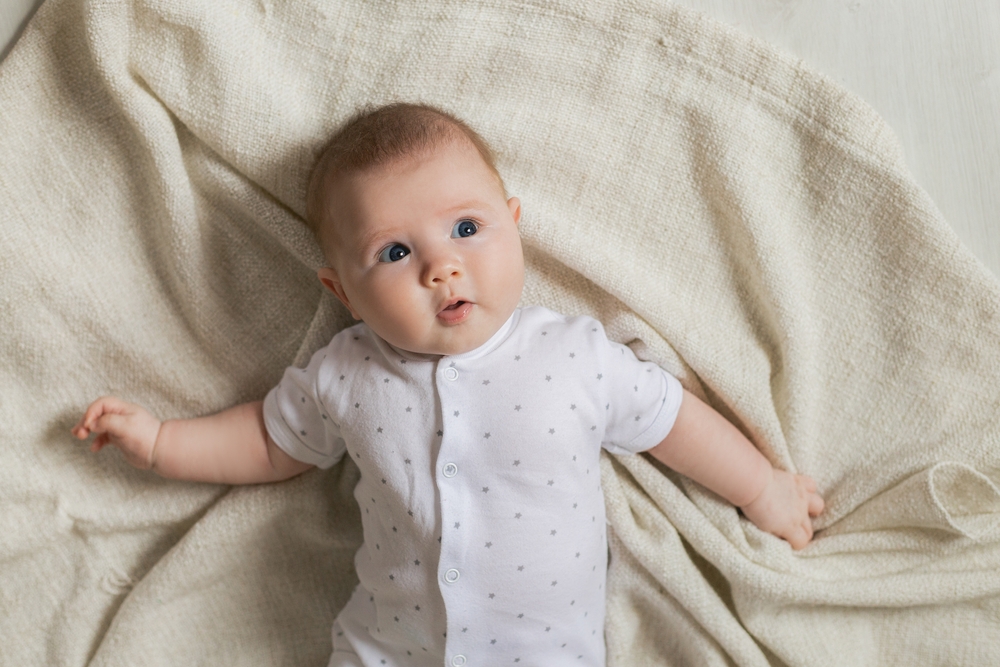
For the initial three months of Luca Bustamante’s lifestyle, he spent all his time with his mom and father at property. Like other mothers and fathers of toddlers born for the duration of the COVID-19 pandemic, Mia Bustamante and her spouse made the decision to limit readers and stay clear of big crowds. Luca eventually bought to fulfill his grandparents, and then other spouse and children, but interaction remained constrained, Bustamante states.
“We were being so careful for two several years, even when I was doing the job in overall health treatment and carrying out rotations as a result of ERs,” suggests Bustamante, who a short while ago grew to become a physician assistant. Shortly just before she was scheduled to return to operate and place Luca in daycare, she and her husband contracted COVID and suspect their baby caught it much too. “We acquired it, we made it via and we felt far better socializing,” she states. Now that they’ve produced antibodies, they’re looking at close friends and loved ones a lot more so their child can interact with other folks.
For a newborn, the initially a few yrs of lifestyle are very important to mind improvement and toddlers require to truly feel safe and protected, be held, spoken to, smiled at, and played with, states Claire McCarthy, a pediatrician at Harvard Health-related School: “It’s simple for moms and dads to imagine that simply because toddlers are minor and do not do extremely much, that it isn’t tremendous significant to interact with them – when exactly the opposite is legitimate.”
The day by day need, for example, of juggling performing from household or other duties with infant interactions can have an affect. “Chances are that they aren’t going to be able to do every thing that infants want for exceptional progress,” she says of mom and dad in that problem.
A Drop in Enhancement Skills
With daycare facilities closed, grandparents self-quarantining and mother and father preserving toddlers at residence for their safety, infants born for the duration of the pandemic had restricted get hold of with any individual but their dad and mom. Those making an attempt to work from property whilst caring for an toddler might have relied more seriously on supports like bouncy seats and confined play areas to keep their babies harmless. Two different research found, when in contrast to babies born in advance of the pandemic, little ones confirmed delays in the growth of social-psychological and motor expertise.
Lauren Shuffrey, an affiliate exploration scientist, was emailing colleagues at the Columbia College Irving Clinical Heart even though in labor with her possess kid in March 2020. “We launched the examine as the pandemic was taking place,” she says. Researchers wished to measure no matter whether babies born to moms who contracted COVID-19 through being pregnant shown developmental delays at 6 months old.
Though they located no change in achieving developmental milestones amongst those toddlers whose mothers had COVID through pregnancy as opposed to these who did not, the babies born between March and December 2020 scored reduced than their pre-pandemic peers on high-quality motor, gross motor and social-psychological improvement, concluded the Columbia examine revealed in January in JAMA. Both of those fantastic and gross motor techniques showed the major decrease.
Researchers utilized the extensively made use of Ages & Stages Questionnaire. The standardized screening resource is dependent on a parent’s observations assessing 5 critical developmental places. Researchers identified no difference in between babies born ahead of or during the pandemic for dilemma-fixing and communication abilities, says Shuffrey, the guide investigator.
In a Brown College research, which is underneath peer critique but has been preprinted in medRxiv, researchers discovered identical effects: Infants beneath the age of 1 born in the course of 2020 and 2021 scored lessen on high-quality and gross motor expertise, verbal and in general cognitive improvement than their pre-pandemic peers. Brown University and Brown’s Warren Alpert Health-related College have had a longitudinal review underway considering the fact that 2009 in which researchers interact with toddlers and toddlers with a mother or father in the place and measure a range of developmental skills as a result of an observational exam, termed the Mullen Scales of Early Studying.
Guide author Sean Deoni, affiliate professor of pediatrics and diagnostic imaging at Brown’s clinical college, claims he was shocked by the benefits. He would have envisioned to see delays in language and social capabilities but not motor capabilities, he states. But it adds up when you imagine about how people were staying away from playgrounds, playgroups and relatives gatherings, in addition the deficiency of “all the kinfolk displaying up and seeking to engage in with them and hug them,” Deoni claims. Youngsters are not observing other young children, he adds, “and they’re just not on the ground rolling all-around and enjoying.”
Some also question whether babies in the medical center were being impacted by the encounters with strangers wearing masks. “I imagine when you blend these reports alongside one another, they get started to insert up to the very same tale,” he states. “These early foundational skills are staying impacted.”
Researchers don’t know what this indicates very long term for a technology of much more than 2 million toddlers born all over the world all through the pandemic and no matter if they can make up for dropped time. The Brown scientists have continued to adhere to the babies born for the duration of the pandemic for the previous six months and the downward trend is continuing, he says.
What Can Parents Do?
Many experiments have shown that parental worry for the duration of pregnancy and in the course of a baby’s early decades impacts brain development, claims Amanda Dettmer, neuroscientist and researcher at the Yale Youngster Study Heart.
“Infants and young children, they are sponges. They decide up on their parents’ and caregivers’ moods,” says Dettmer. When it arrives to caring for children as the pandemic lingers, she implies the airline analogy, the place mom and dad are suggested to put on their very own oxygen mask 1st. “If you are stressed out and that worry is coming out, your little one can definitely decide on up on that.”
If the concept of self-care would seem unachievable, McCarthy indicates small ways, these types of as taking your little one for a walk, phoning a friend, even doing a couple of yoga poses with your toddler on the floor close by. Mother and father experience anxious or unfortunate could question their main care provider for a referral to a therapist, she claims. Mothers and fathers dealing with monetary worry can talk to their principal care supplier or their child’s pediatrician for valuable resources.
For mammals, particularly primates like human beings, infants’ most vital romance is with their key caregiver, Dettmer suggests, so paying the 1st yr of everyday living isolated within a loving, protected residence should be fine. “Babies, primarily less than a year of age, seriously want regimen, protection and stability. They need to know they have caregivers, mom and father, a grandparent, a daycare provider,” she says, “who will answer to their psychological needs.”
Not all babies have people best disorders. In the Brown study, youngsters whose mothers experienced larger training attainment, who have been born complete phrase and at a healthier bodyweight scored far better than their examine peers, general. Moms with decrease amounts of education might not have the option of doing the job from dwelling and, with daycare centers closed at the begin of the pandemic and afterwards reopened at partial ability, excellent and inexpensive daycare has been scarce, the analyze says.
Minimal-earnings people have also suffered bigger rates of disease and demise, career decline and financial burden although also getting a lot more probably to perform in jobs that expose them to the virus, so this analyze is 1 additional indicator the pandemic is obtaining a far more deleterious impact on small-earnings homes, Deoni states.
He adds that it’s important to don’t forget these developmental delays are not parents’ fault. But he also concerns men and women will lean as well heavily on the notion that youngsters are resilient, and will just bounce back. “We speak about the impact of the first 1,000 days,” he says. “Do we definitely want to wager a entire generation on the notion [that] little ones are resilient?”
About the Author

