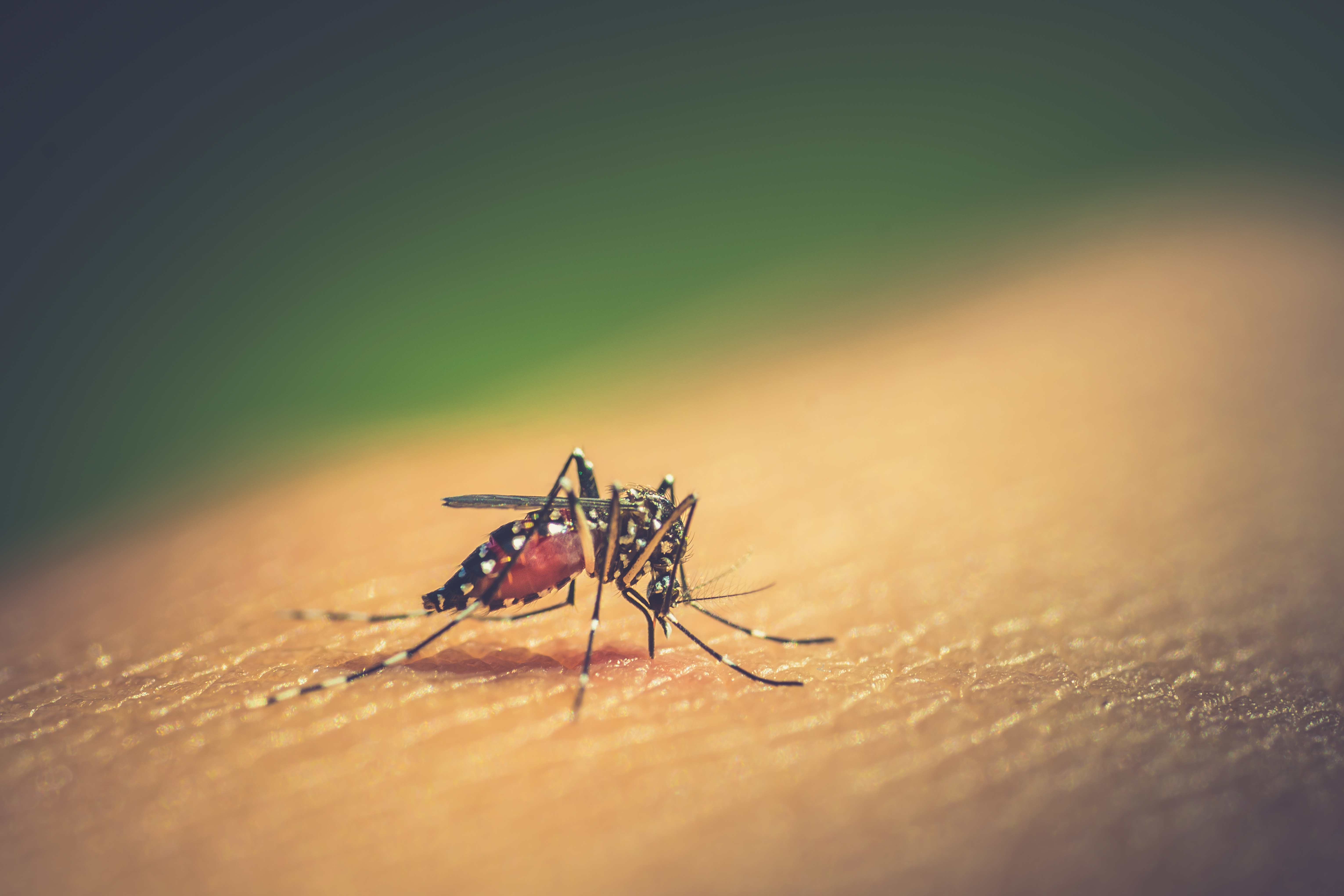
Malaria kills more than four hundred,000 persons a calendar year all-around the entire world, most of them kids. That toll, though grim, is a minor beneath fifty percent what it was in 2000, many thanks to strategies to distribute mosquito nets, conduct indoor pesticide spraying and administer preventive prescription drugs. Since 2015, nevertheless, elements ranging from funding shortfalls to greater drug and insecticide resistance have prompted the quantities of deaths and general instances — much more than two hundred million on a yearly basis — to plateau.
Two breakthroughs could make a distinction. Just one came in October, when the World Wellbeing Corporation accredited the first vaccine from the disorder. Mosquirix, produced by GlaxoSmithKline, is only reasonably productive: In scientific trials, it diminished instances by about 56 per cent more than twelve months, dropping to 36 per cent more than four years. Nonetheless, as Pedro Alonso, director of the WHO’s malaria method, noted, its approval is “a historic party.”
Fewer seen, but perhaps similarly important: In April, a analyze posted by The Lancet exposed that a rival vaccine could be significantly superior. R21/Matrix-M, formulated by Oxford University’s Jenner Institute, showed up to 77 per cent efficacy more than one particular calendar year — the first malaria vaccine prospect to arrive at the objective of seventy five per cent established in 2013 by the WHO.
Individuals conclusions came from a scientific demo involving 450 kids in the West African country of Burkina Faso, where malaria strikes much more than one particular-third of the population each individual calendar year. Participants ranged in age from 5 months to 17 months. 3 doses had been presented at four-week intervals, with a booster shot one particular calendar year later on. In excess of that time period, just 38 of the 146 youngsters in the large-dose team formulated malaria, versus 105 of the 147 in the handle team.
“We experienced to go back again and search thoroughly to make absolutely sure what we had been viewing was actual,” claims parasitologist Hermann Sorgho, who co-led the demo at the Medical Investigation Device of Nanoro with the site’s director, Halidou Tinto. “It was a great end result.”
Greater experiments could present considerably less extraordinary defense or unforeseen security problems. But if the final results hold up, R21/MM could be a strong weapon in controlling — and inevitably reducing — one particular of humanity’s finest microbial foes.
Tweaking the System
Since the first check of a malaria vaccine in the nineteen forties, researchers have grown accustomed to disappointment: Plasmodium falciparum, the parasite that causes the most typical variety of the disorder, has more than 5,000 genes and a daunting array of evasive techniques. Right before R21, Mosquirix experienced been the ideal-performing vaccine prospect at any time.
In some approaches, the two vaccines are equivalent. Both equally coach the immune process to assault the exact molecular concentrate on, or antigen — a protein from the parasite. Both equally use a equivalent shipping and delivery process: very small spheres of hepatitis B protein (a convenient provider) coated with the malaria antigen. But the Oxford group, which also formulated the Oxford-AstraZeneca COVID-19 vaccine, designed two essential tweaks for R21/MM. Initially, they observed a way to maximize the ratio of malaria protein to hepatitis protein on the nanosphere’s surface area. “That gets you much more antibodies,” describes Jenner Institute director Adrian Hill, “and you are not competing so a lot with hepatitis B for induction of an immune reaction.” 2nd, they utilized a new adjuvant — an ingredient that boosts immune reaction — that triggers less side consequences.
Another likely advantage: Because R21/MM needs reduced dosages than Mosquirix, and its adjuvant is more simple to manufacture, it can be manufactured much more effectively and at reduced price. Oxford is partnering with Serum Institute of India, the world’s most significant vaccine producer, which has pledged to churn out at minimum two hundred million doses on a yearly basis.
Prior malaria vaccine trials, like this 2019 pilot method in Malawi, have sought to eradicate the deadly disorder. (Credit history: Amos Gumulira/AFP through Getty Photos)
In destinations where malaria is endemic, the influence of an productive vaccine — or two — could go outside of diminished mortality. Although individuals may well acquire partial immunity after repeated exposures, kids generally put up with many extreme episodes a calendar year. “Every time a child gets sent down with malaria,” Sorgho claims, “the mother or father has to quit do the job and care for him. The child is not going to faculty. The losses are huge.”
The Oxford group launched a pivotal section-3 demo in summertime 2021, enrolling 4,800 kids in Burkina Faso, Mali, Kenya and Tanzania. If all goes as hoped, final results could be submitted to regulators in late 2022.
About the Author