
Credit: photon_photograph through Adobe Stock
IT management application company SolarWinds recently released its yearly IT trends report, which incorporates a dive into an issue the business has very authentic knowledge with — dealing with security threats.
The report, “Building a Secure Foreseeable future,” seems to be at how technological innovation industry experts regard the existing state of hazard in evolving business environments, where by the pandemic and other aspects can build new potential points of exposure. This also heralds the introduction of a information, “Secure by Design and style,” from SolarWinds that could serve as an approach to better mitigate cyberattacks going forward.
Sudhakar Ramakrishna, CEO of SolarWinds, joined the business in January from Pulse Secure, not extended immediately after very last December’s infamous Sunburst cyberattack designed headlines.
Sunburst was a refined, malware provide chain assault that SolarWinds suggests inserted a vulnerability into application used by hundreds of its buyers. SolarWinds suspects the assault, which could have started two several years right before its discovery, was conducted at the behest of another country state but has not yet verified the supply of the assault.
Ramakrishna spoke with InformationWeek about the attitude and views on security seen across the business landscape and some of the IT security classes acquired from dealing with the pandemic lockdowns and the Sunburst cyberattack.
What were being some presumptions on how IT security should really be dealt with prior the pandemic and Sunburst? How have issues transformed and what stands between the report’s conclusions?
A great deal of the principles we are applying submit-pandemic with distant function and other trends have been identified to us for a interval of time. The movement to the cloud, the target on elimination of shadow IT, the regularity of procedures concerning cloud-centered infrastructure and premises-centered infrastructure — those people were being issues that currently existed.
Having said that, mainly because there was that urgency to make everybody distant, specified constructs like endpoint security were being not prime of brain. Nor was coverage integration concerning cloud and application infrastructure with premises infrastructure. Those people are two key issues that took place and have attained a heightened perception of target. In some industries, let’s say the fiscal marketplace, compliance and governance are incredibly significant. In those people situations, buyers were being remaining in a lurch mainly because they did not actually have the suitable remedies and vendors experienced to adapt.
I talk from the context of a prior business [Pulse Secure] that was a pioneer in zero-believe in systems and when the pandemic hit, we pretty much experienced to get businesses where by they could have 250,000 personnel where by scarcely 10,000 were being working remotely at any place in time to a business where by all 250,000 personnel experienced to function from household.
That put a great deal of pressure on IT infrastructure, security extra especially.
With the transfer to distant, were being there authentic technological innovation variations or was it a matter of implementation of existing means? The human part of the equation of how to approach these issues — is that what actually transformed?
The way I would describe security at big, and hazard as well, is that it has as significantly to do with procedures, human conduct, and target as it does on genuine technological innovation. A great deal of situations we sense like, “We threw in a firewall we should really be harmless.” There’s significantly extra to security and hazard than that. Regions these types of as configuration, coverage, schooling of people, and human conduct insert as significantly to it.
Unique to the pandemic, a great deal of systems, endpoint security, cloud security, and zero believe in, which have proliferated immediately after the pandemic — businesses have transformed how they communicate about how they are deploying these.
Earlier there could have been a cloud security team and an infrastructure security team, very soon the line started out having blurred. There was very small require for network security mainly because not quite a few people were being coming to function. It experienced to be transformed in conditions of business, prioritization, and collaboration inside of the business to leverage technological innovation to guidance this type of workforce.
What stood out in the report that was both shocking or reaffirming?
Just one of the worries that carries on to leap out is the deficiency of schooling for staff. Risk and security have a great deal of implications on people. Absence of schooling carries on to leap out it seems to happen 12 months immediately after but very small is staying completed about it.
In our scenario, we are concentrating a great deal extra on interns, grabbing people in faculties and universities and having them qualified so they’re completely ready for the workforce. I think it wants to be extra of a community effort to make people extra knowledgeable of these troubles, initially and foremost. You can only shield when you are knowledgeable. Absence of schooling is a obstacle. A deficiency of finances, and as a result lowered staff members, also retains coming up. I believe that is where by technological innovation and vendors like us have to give technological innovation to simplify the lives of IT industry experts.
It is shocking to me that about eighty{36a394957233d72e39ae9c6059652940c987f134ee85c6741bc5f1e7246491e6} of people fully grasp or think they are completely ready to address cyberattacks. I would like to dig deeper into what level of preparedness indicates and is there regularity in the level of preparedness. This goes again to the level of awareness you have, the schooling you have — those people two issues should really drive level of preparedness.
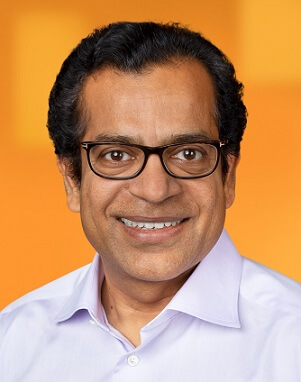
Sudhakar Ramakrishna, CEO, SolarWinds
Pertaining to schooling, are we speaking very intense schooling that wants to happen? Most businesses have cursory periods to make personnel knowledgeable of potential vulnerabilities.
Formally schooling them as well as schooling them in context are significant. We have proven a “red team” inside of our business. Usually, crimson teams are only set up in esoteric security businesses, but my perspective is that as extra and extra businesses turn out to be hazard-knowledgeable, they could possibly commence these issues as well.
Just one element of it is regular vigilance. Each individual team has to be constantly vigilant about what could possibly be happening in their natural environment and who could be attacking them. The other facet of it is regular understanding. You constantly exhibit awareness and vigilance and constantly study from it. The crimson team can be a very effective way to coach an full business and sensitize them to let’s say a phishing assault. As common as phishing assaults are, a big the greater part of people, which includes in the technological innovation sectors, do not know how to totally avert them in spite of the actuality there are great deal of phishing [detection] technological innovation instruments available. It arrives down to human conduct. That is where by schooling can be regular and contextual.
How have cyberattacks developed? Are there unique approaches used now that were being not common right before the pandemic? Will the character of vulnerabilities evolve continually?
That has been the scenario for as extended as I have been in the marketplace and that will continue to evolve, apart from at a extra accelerated rate. A couple of several years in the past, the concept of a country-state cyberattack was foreign. When there were being cyberattacks, they were being largely viruses or ransomware developed by a couple of people both to grab consideration or probably get a small bit of ransom. That used to be the predominant range. Increasingly, country-states are participating or at minimum supporting some of these danger actors. They have a great deal extra persistence and patience in their approach to cyberattacks.
Earlier, the aim use to be a virus. The position of a virus is to occur in and get as significantly visibility as you can, build as significantly hurt as you can, and then afterwards you could possibly be inoculated. Appropriate now, these are superior, persistent threats. The full idea is to persistently assault but the entity staying attacked does not know about it mainly because they are staying very client and deliberate, flying beneath the radar for the most element.
The level and extent of hurt is not identified till well into the assault. There is a essential shift in that attitude. Which is where by you see provide chain assaults. Which is where by you see slow assaults. How you detect and shield towards those people is now turning into significantly extra of a obstacle. If a little something is really obvious, it can be found and mounted. If it’s not obvious, how do you find it?
What was comprehended about the Sunburst assault and when you grew to become CEO, what methods did you put in movement in reaction?
As I came into SolarWinds, you appear at the finances and the staff members dimensions to say, “For a business of your dimensions, did you have investments in security commensurate to the marketplace?” The remedy was a resounding sure. We in contrast it towards IDC benchmarks, and we were being paying out at a level that was somewhat even. So, shell out was not the issue. What was the issue?
Like quite a few other bigger businesses, there are unique procedures and administrative domains in the business. When you have that, it opens up home windows of possibility for attackers. Just one of the key issues we have completed, a lesson acquired, is consolidate them beneath purview of a CIO to make positive there is regularity, there is multifactor authentication, there is solitary indicator on to different programs.
This is a self-check every single business should really go via and try to reduce the range of stovepipes.
We investigated what we could have been capable to do to shield our builder environments significantly better. We have built Paddle-make environments, shifting the assault area for a danger actor, thus preserving the integrity of our provide chain extra correctly.
The implementation of the crimson team, anywhere beneath the purview of our CISO, we will be operating basically assault drills.
Those people processes, instruments, and methods staying used are unidentified to the relaxation of our business. When they simulate an assault, it seems like it’s coming from the outside. This is element of the regular vigilance/regular understanding factor.
We standardized on endpoint protection across the business so regardless of regardless of whether they are distant or inside the network, you have regular procedures. We also integrated cloud and premises-centered procedures so there is no fragmented coverage islands. Also, obligatory security schooling for every single employee in the business, sponsored by our CISO.
So, there is no magic bullet for security that fixes all troubles?
I want there were being and I’m positive a great deal of us continue to look for for it.
Connected Material:
What SolarWinds Taught Enterprises About Details Defense
How SolarWinds Altered Cybersecurity Leadership’s Priorities
SolarWinds CEO: Assault Started Substantially Previously Than Earlier Thought
Joao-Pierre S. Ruth has expended his career immersed in business and technological innovation journalism initially covering local industries in New Jersey, later on as the New York editor for Xconomy delving into the city’s tech startup community, and then as a freelancer for these types of outlets as … Watch Comprehensive Bio
Extra Insights
About the Author


